
South Carolina Traffic Ticket Records
South Carolina traffic ticket records are public documents held by the court system in each of the 46 counties. You can search SC traffic ticket records by citation number, driver's license number, or name and date of birth. The state provides free online tools for most lookups. This guide explains where to search, how to pay a ticket, how to get your driving record, and what the law says about traffic violations in South Carolina.
South Carolina Traffic Ticket Records Quick Facts
South Carolina Traffic Ticket Search Portal
The South Carolina Judicial Branch runs a free online tool specifically for traffic tickets. You can reach it at sccourts.org/apps/traffic-ticket-search. The portal lets you search in three ways: by citation number, by driver's license number, or by full name combined with date of birth. Results show the citation details, the current case status, and the court handling the matter.
The SC Judicial Branch built this tool to help drivers find their tickets quickly without visiting a courthouse. It covers traffic citations issued across all 46 South Carolina counties. Most citations appear in the system within a few business days of being issued. If your ticket does not show up right away, check back after three to five business days.
Visit the SC Judicial Branch Traffic Ticket Search Portal to search for your citation. The page shown below is where you start your lookup using any of the three search options.
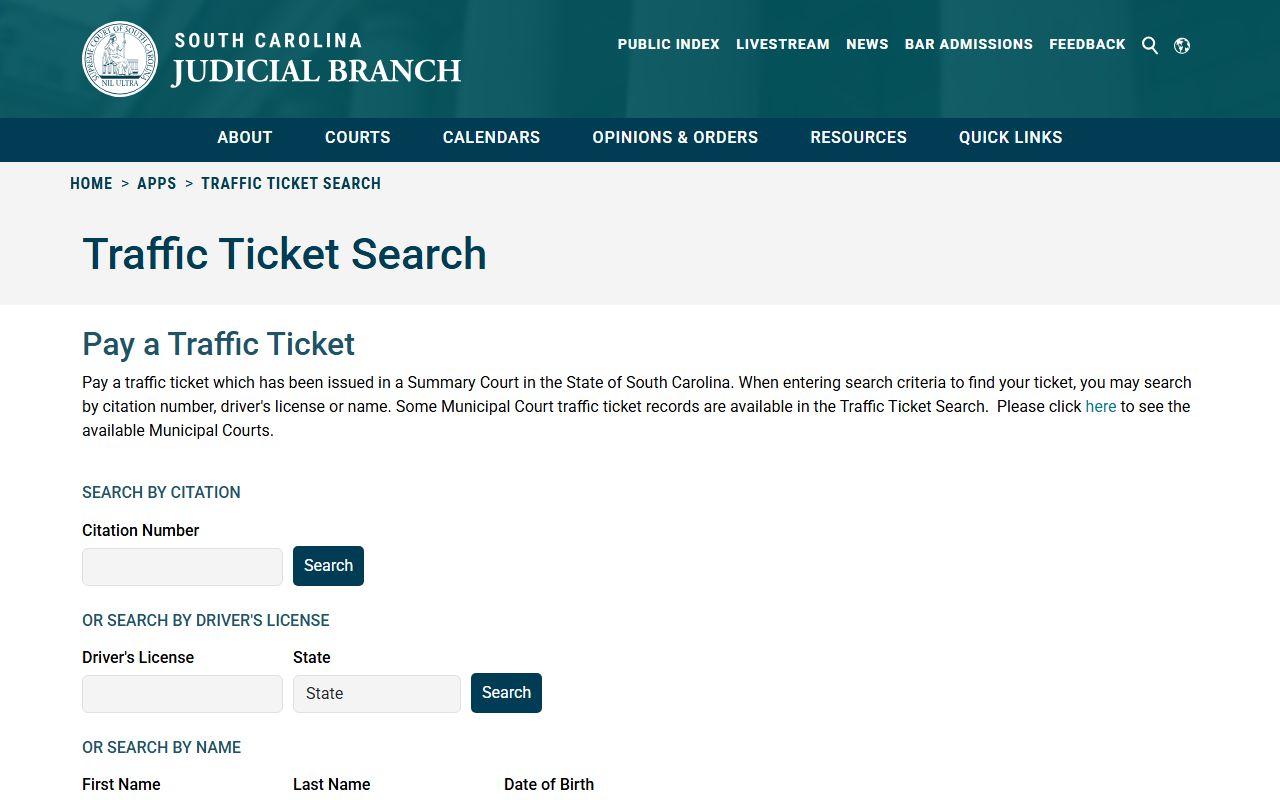
Once you find your ticket, the portal displays the offense description, court date if one is set, and the amount owed. You can also follow a link from the portal to pay the ticket online in many cases.
Note: The traffic ticket portal is separate from the full Public Index case search. For older cases or detailed court records, use the SC Judicial Branch Case Records Search instead.
SC Court Records Search for Traffic Cases
Beyond the dedicated ticket portal, South Carolina provides a broader court records tool. The SC Judicial Branch Case Records Search, also known as the Public Index, covers all case types including traffic matters. You can look up traffic cases by party name or case number. The system shows party names, filing dates, hearing dates, and case dispositions. It is free to search and available around the clock.
As of January 1, 2026, home addresses are no longer shown in the public display of court records. This change affects the Public Index for all case types. Case numbers, party names, court dates, and case outcomes remain available. If you need a full document copy, you must contact the Clerk of Court in the county where the ticket was issued. Most clerks charge a per-page fee for copies.
The Public Index Case Search entry point gives you access to circuit courts, family courts, magistrate courts, and municipal courts statewide. Magistrate courts and municipal courts are where most traffic tickets end up in South Carolina. These are also called Summary Courts. They handle speeding tickets, seat belt violations, red light citations, and most other moving violations.
For appellate matters involving traffic cases, the C-Track Public Access system covers the Court of Appeals and the South Carolina Supreme Court. Most drivers will never need this tool for a standard traffic ticket, but it is available for those challenging a conviction on appeal.
Visit the C-Track Public Access portal, shown below, to search appellate court records tied to traffic cases that have moved beyond the trial court level.
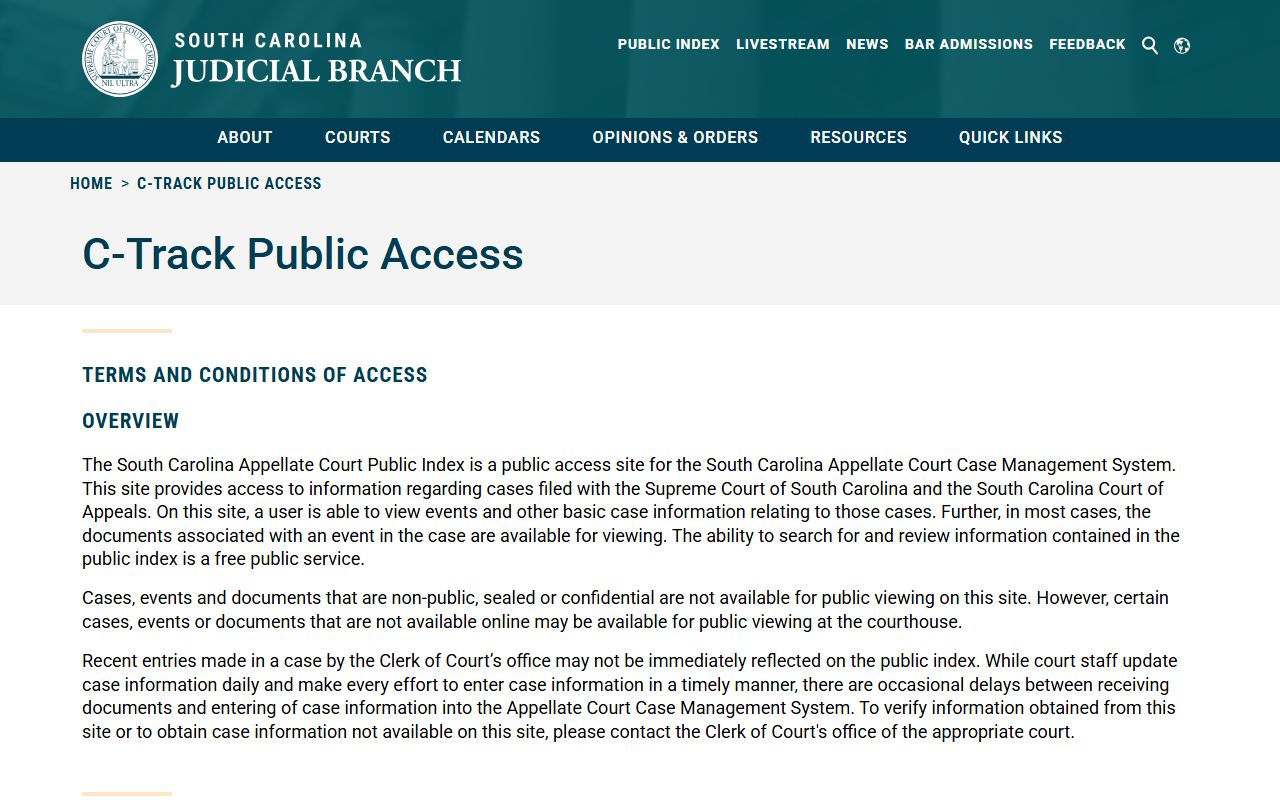
Appeals in traffic cases are uncommon but do occur, particularly when a driver contests a DUI conviction or a major license suspension. The C-Track system lets you check the status of any such appeal by case number or party name.
How to Pay South Carolina Traffic Tickets Online
South Carolina makes it easy to pay a traffic ticket without going to a courthouse. The state's official payment portal at SC.GOV Traffic Ticket Payments covers all 46 counties and more than 80 municipalities. Paying online resolves the citation quickly and avoids additional late fees.
The process has four steps. First, select the county or city where the ticket was issued. Second, enter your case number from the citation. Third, review the charges and submit payment by credit or debit card. Fourth, receive a confirmation of the payment. Keep the confirmation for your records in South Carolina.
The official SC.GOV traffic payment page is shown below. It is the starting point for online payments across the state.
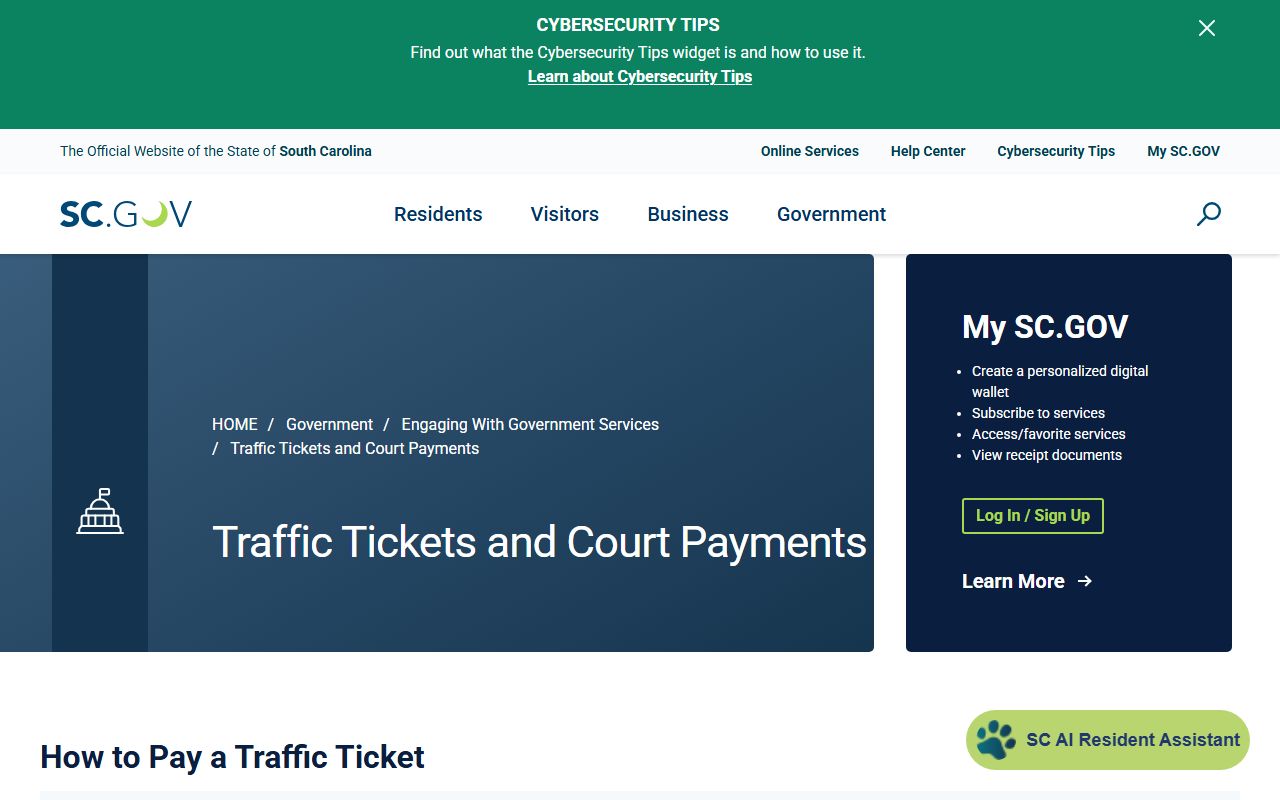
Paying a ticket online does not contest the violation. It is an admission of the offense. If you want to fight the ticket in court, do not pay it online. Instead, appear in court on the date listed on your citation or contact the court before that date to schedule a hearing in South Carolina.
Note: Some courts require you to appear in person regardless of whether you plan to pay or contest the ticket. Check your citation carefully for any mandatory court appearance requirement in South Carolina.
South Carolina Driving Record and Points Lookup
Traffic tickets in South Carolina add points to your driving record. Accumulating 12 or more points triggers an automatic license suspension. Knowing your point total helps you understand your risk. The SCDMV Driving Records page explains exactly how to get your official record.
South Carolina offers a free point summary online. This gives you your current point total without a full record. For a complete driving history, the state charges $10 for either a three-year or ten-year record. You can order by mail using the MV-70 form. Mail delivery typically takes one to two weeks. The SCDMV Online Portal also provides access to many driver services without a visit to a DMV office.
Below is the SCDMV Driving Records page where you can request your record or access the free point summary.
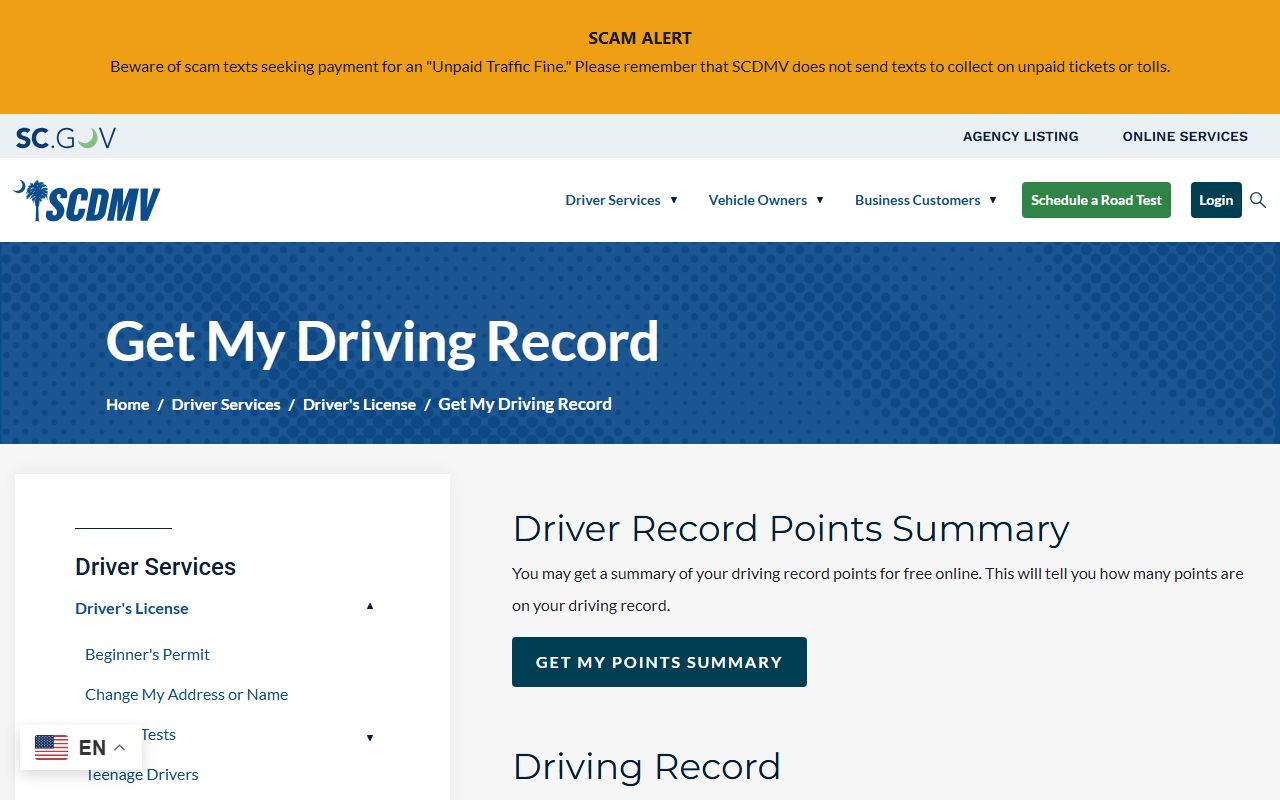
Insurance companies and courts may request your driving record separately. The DMV releases records to authorized parties under state law. If you are concerned about what appears on your record, order a copy for yourself before others do in South Carolina.
The SCDMV Online Services portal shown below consolidates many tasks you can complete without visiting a DMV branch. This includes license renewals, address changes, and record requests.
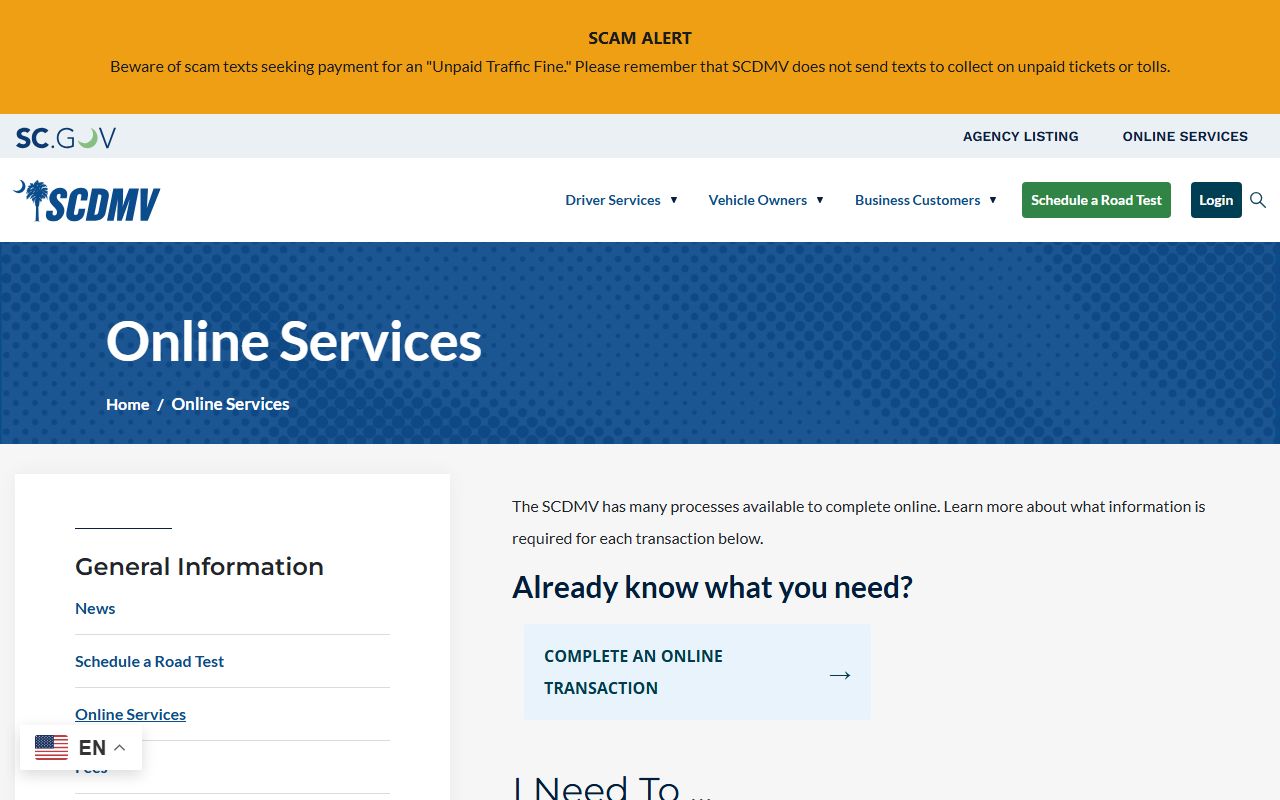
Using the online portal saves time compared to visiting a DMV office in person. Most record requests submitted online or by mail are processed within the stated timeframes by the SCDMV.
SCDMV Online Portal for Traffic Record Services
The SCDMV Online Portal at scdmvonline.com is a central hub for driver and vehicle services in South Carolina. It connects to the same driver record systems used by courts and insurers. You can check license status, view point information, and start record requests from this site.
Below is a view of the SCDMV Online Portal main page.
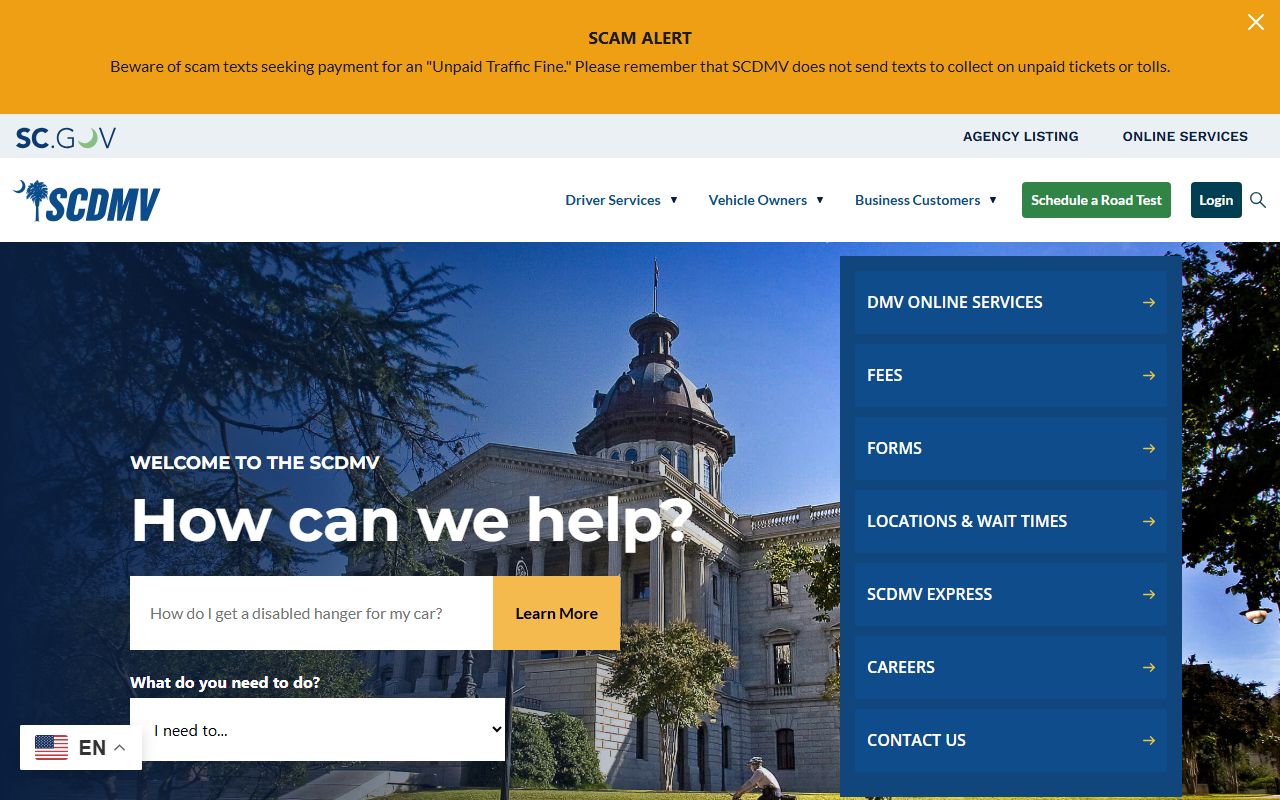
Driver records obtained through the SCDMV reflect convictions and point assessments after courts report them. There can be a short delay between a court conviction and when it appears on your driving record. If you recently had a ticket resolved, allow two to four weeks before checking for the updated point total in South Carolina.
SC Highway Patrol and Traffic Enforcement Records
Most traffic tickets on South Carolina highways are issued by the SC Highway Patrol. The patrol is part of the SC Department of Public Safety. Officers issue citations under the Uniform Traffic Citation format established by S.C. Code Ann. § 56-7-10. This standard form ensures consistent information across all citations in South Carolina.
The SC Department of Public Safety resources page is shown below. It provides information on patrol operations, crash reports, and traffic enforcement programs statewide.
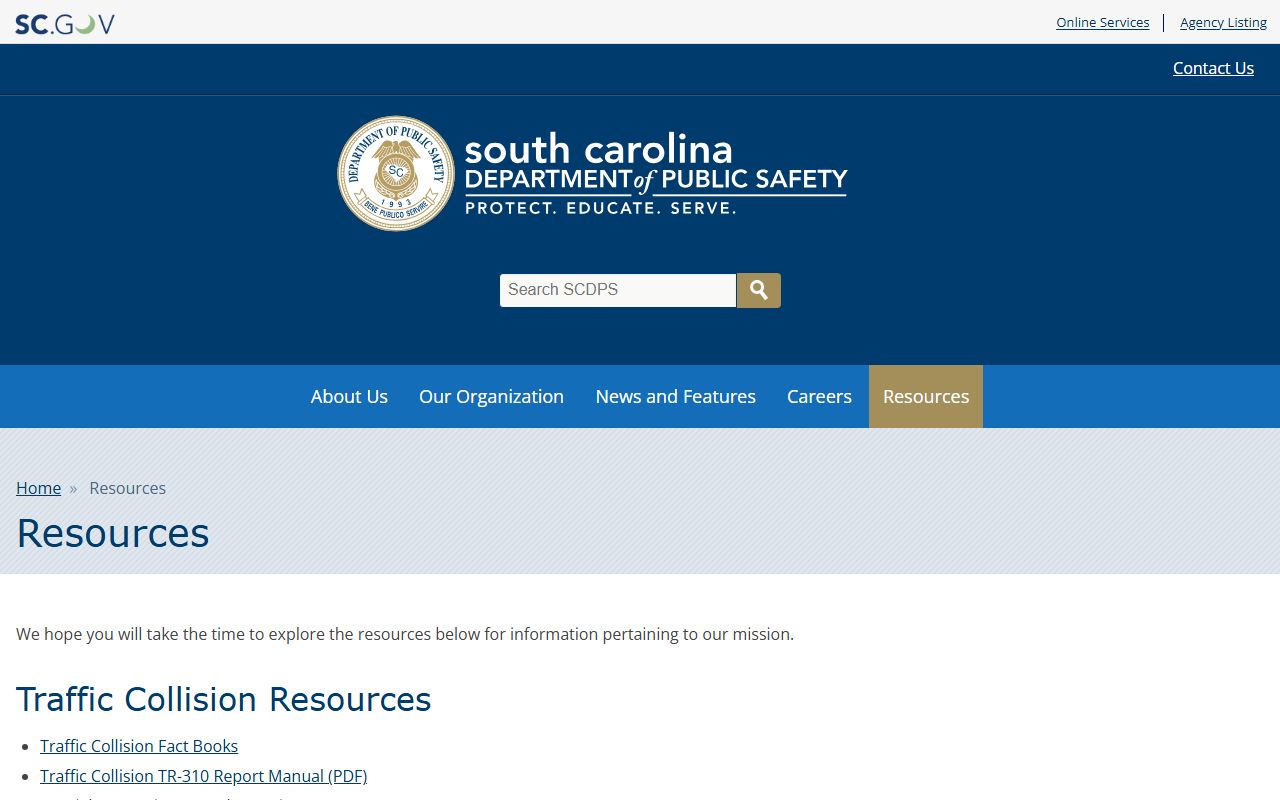
If you need a copy of a crash report tied to a traffic stop in South Carolina, the SC Department of Public Safety handles those requests. Crash reports are separate from traffic citations but often connected. You can request crash reports through the DPS portal or in person at a Highway Patrol troop headquarters.
South Carolina Traffic Laws and Common Violations
South Carolina traffic law is codified primarily under Title 56, Chapter 5 of the SC Code of Laws. The chapter is titled "Uniform Act Regulating Traffic on Highways" under § 56-5-10. It sets the rules for speed, right of way, lane changes, and dozens of other driving behaviors. Knowing these rules helps you understand what a citation means and what penalties may apply.
The SC Code Title 56 page is shown below. It is the primary legal reference for all traffic violations in South Carolina.
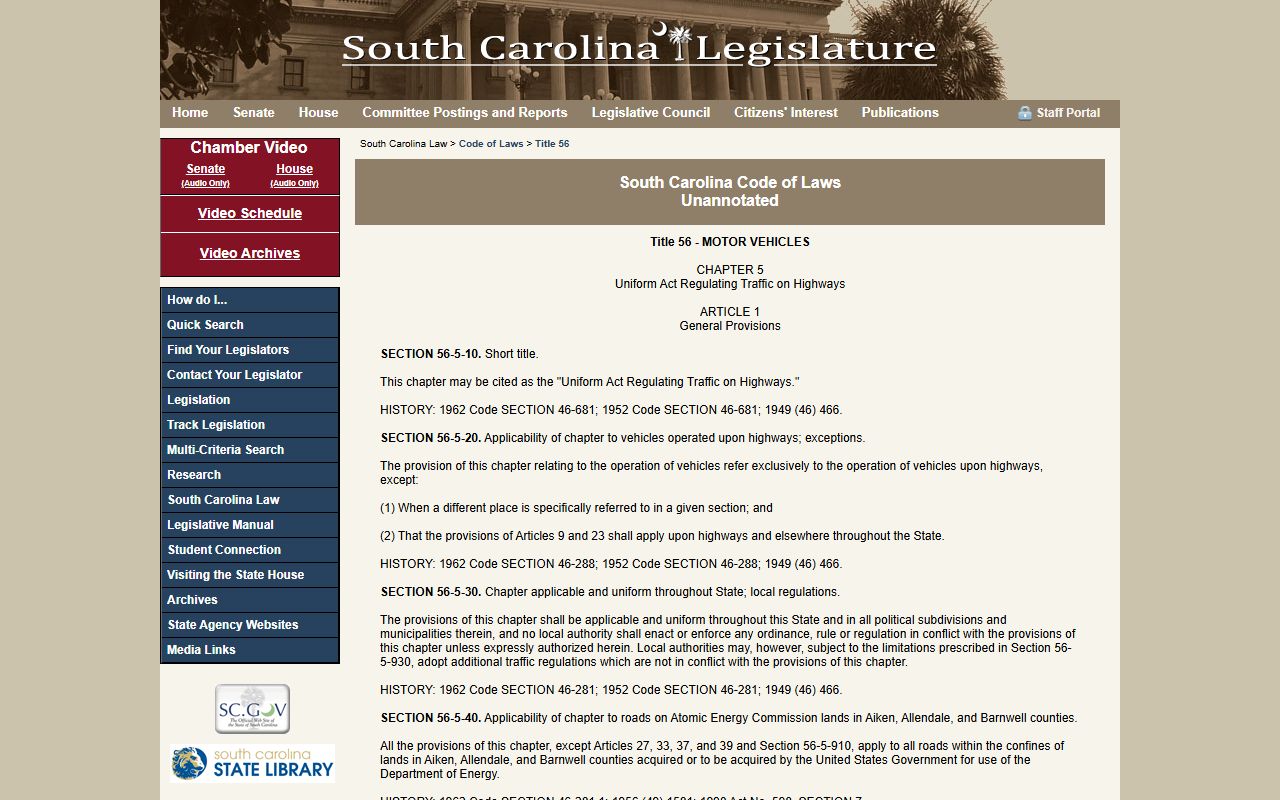
Speed limit rules come from § 56-5-1520. The standard limits are 70 mph on interstates, 60 mph on multilane divided highways, 55 mph on other roads, 40 mph on unpaved roads, and 30 mph in urban areas. Fines for speeding run from $15 to $200 and scale up with how far over the limit you were driving. Points are also added to your license for speed violations.
South Carolina law under § 56-5-2920 makes reckless driving a misdemeanor that adds 6 points to your license. That is the single highest point value for a common traffic offense. Reaching 12 points means an automatic suspension. Reckless driving can be charged alongside speeding or other violations in South Carolina.
Texting while driving is a primary offense under § 56-5-3890. Officers can stop you solely for using a handheld device to send or read messages while driving. The fine is $25 and no points are added for a first offense. However, the citation still appears on your driving record in South Carolina.
Failure to stop for a law enforcement officer carries serious consequences under § 56-5-750. A first offense brings a fine of $500 to $1,000, a jail term of 90 days to three years, and a 30-day license suspension. This offense is treated far more seriously than a standard moving violation. Courts in South Carolina handle these cases at the General Sessions level rather than in a Summary Court.
Note: Under § 56-5-6160, a traffic conviction is not admissible as evidence in a civil lawsuit arising from the same incident in South Carolina.
South Carolina DUI and DUAC Traffic Records
DUI convictions in South Carolina carry steep penalties. Under § 56-5-2930, a first DUI offense brings a $400 fine, at least 48 hours in jail or community service, and enrollment in the Alcohol Drug Safety Action Program (ADSAP). A second offense raises the fine to $2,100 and requires at least 30 days in jail. A third or subsequent DUI is a felony in South Carolina.
South Carolina also has a separate DUAC offense. Under § 56-5-2933, driving with a blood alcohol concentration of 0.08% or more is a per se offense called Driving with an Unlawful Alcohol Concentration. DUAC is charged separately from DUI and carries similar penalties. Both offenses appear on your driving record and affect your insurance rates in South Carolina.
DUI and DUAC records are part of the public court record. You can search them through the SC Judicial Branch Case Records Search. For driving record impacts, check your record through the SCDMV. DUI convictions add significant points and can trigger longer suspensions than standard traffic offenses in South Carolina.
Suspended License and Habitual Offender Records
Driving on a suspended license is a separate offense from whatever caused the suspension. Under § 56-1-460, a first offense brings a $300 fine or 30 days in jail. A second offense brings $600 or 60 days. A third offense is a felony. Records of these convictions are public and searchable through the court case search tools.
Habitual offender status is defined under § 56-1-720. A driver becomes a habitual offender after three major traffic offenses or ten minor offenses within three years. The penalty is a five-year license revocation. Habitual offender determinations are made by the SCDMV after reviewing your driving record. These records are also part of your public driving history in South Carolina.
If you believe your record contains errors, you can request a correction through the SCDMV. You will need documentation showing the error, such as a court order or letter from the clerk of court. The correction process takes several weeks in South Carolina.
Note: Driving after being declared a habitual offender is a separate felony charge under South Carolina law, which makes keeping an accurate and up-to-date driving record especially important.
SC Judicial Branch Resources for Traffic Records
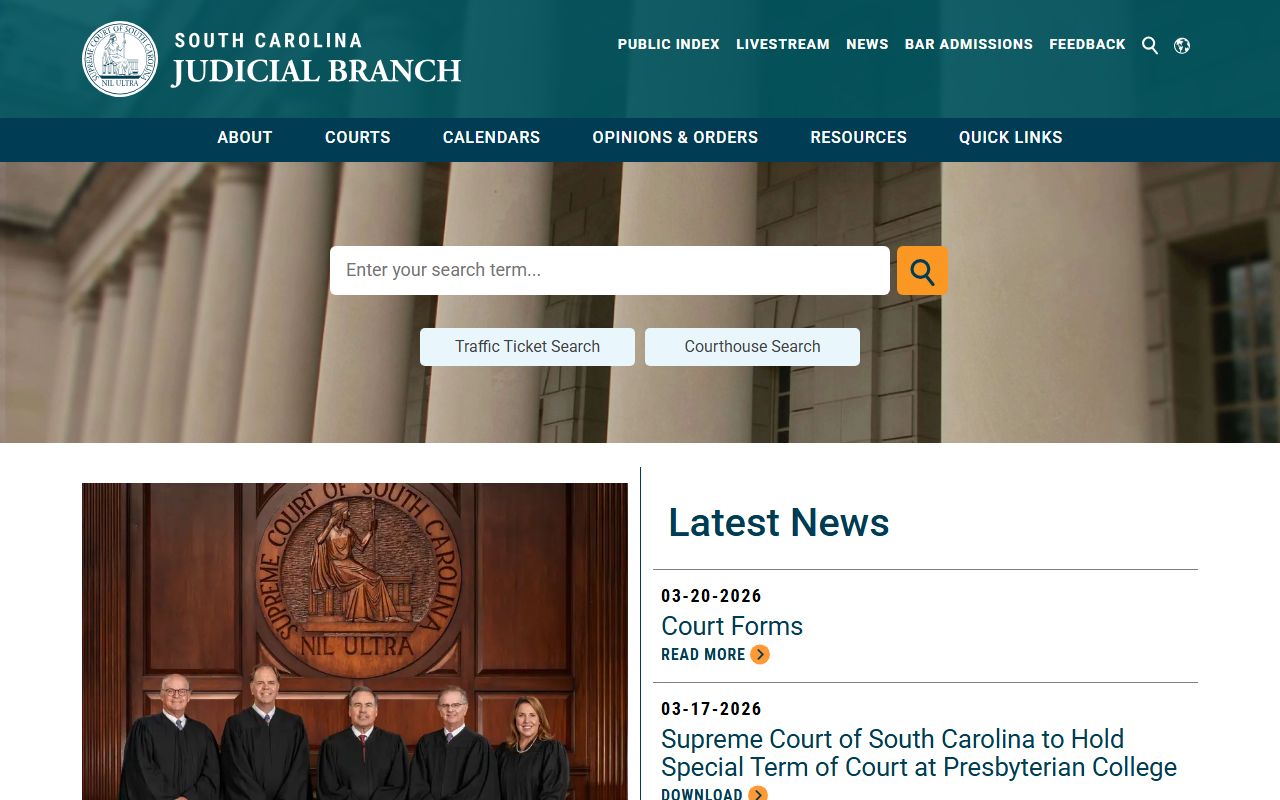
The main entry point for all court-related traffic record searches is the SC Judicial Branch homepage. From there you can reach the traffic ticket portal, the Public Index, the C-Track appellate system, and other tools. The site also has contact information for every court in South Carolina, which is useful when you need to speak with a clerk directly.
The SC Judicial Branch homepage is shown below. It serves as the hub for all online court record services in South Carolina.
Summary Courts, which include magistrate courts and municipal courts, handle the majority of traffic tickets in South Carolina. Each county has at least one magistrate court. Larger counties may have several. Municipal courts operate within city limits and handle violations of local ordinances alongside state traffic law. Finding the right court for your ticket starts at sccourts.org.
Public Access to South Carolina Traffic Records
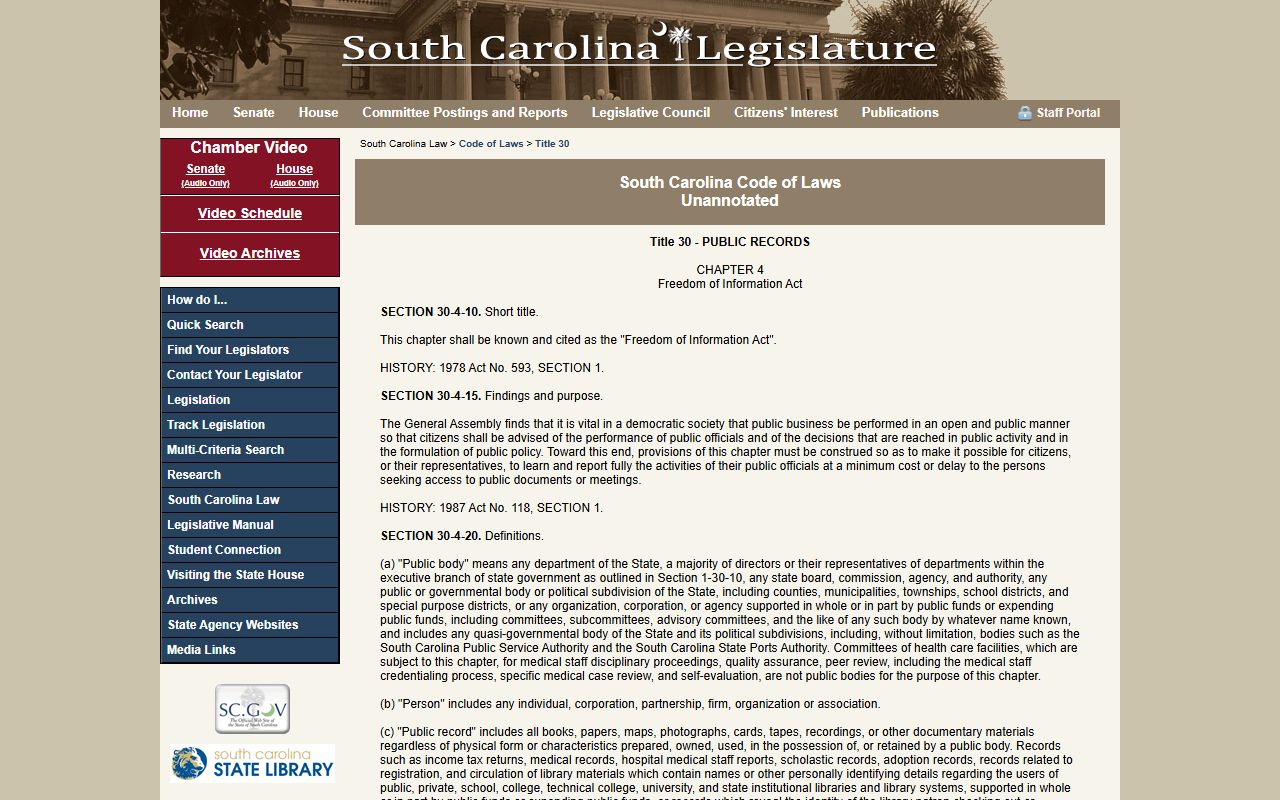
Traffic ticket records in South Carolina are public records. The South Carolina Freedom of Information Act, enacted in 1987 and amended in 2017, guarantees public access to government records. The full text of the FOIA appears at S.C. Code Ann. § 30-4-10. Under this law, anyone can request copies of court records, including traffic cases, without stating a reason.
The SC FOIA law page is shown below. It defines the rights of the public to inspect and copy government records in South Carolina.
Response time rules under the FOIA depend on the age of the records. For records less than 24 months old, the agency must respond within 10 business days and produce the records within 30 calendar days. For records more than 24 months old, the response window is 20 business days, and production must occur within 35 calendar days. Courts and agencies cannot charge for time spent searching in most circumstances.
The Public Index automated search system is available at no cost. Manual FOIA requests to a court clerk may involve copy fees. Automated or bulk extraction of data from court systems is prohibited by court policy. If you need records for multiple cases, submit a written FOIA request rather than scraping the online system in South Carolina.
Browse South Carolina Traffic Ticket Records by County
Each of the 46 South Carolina counties has its own court system that processes traffic tickets. Select a county below to find local information about traffic ticket records in that area.
Browse South Carolina Traffic Ticket Records by City
Municipal courts in major South Carolina cities handle traffic tickets issued within city limits. Select a city below to find traffic ticket record information for that area.